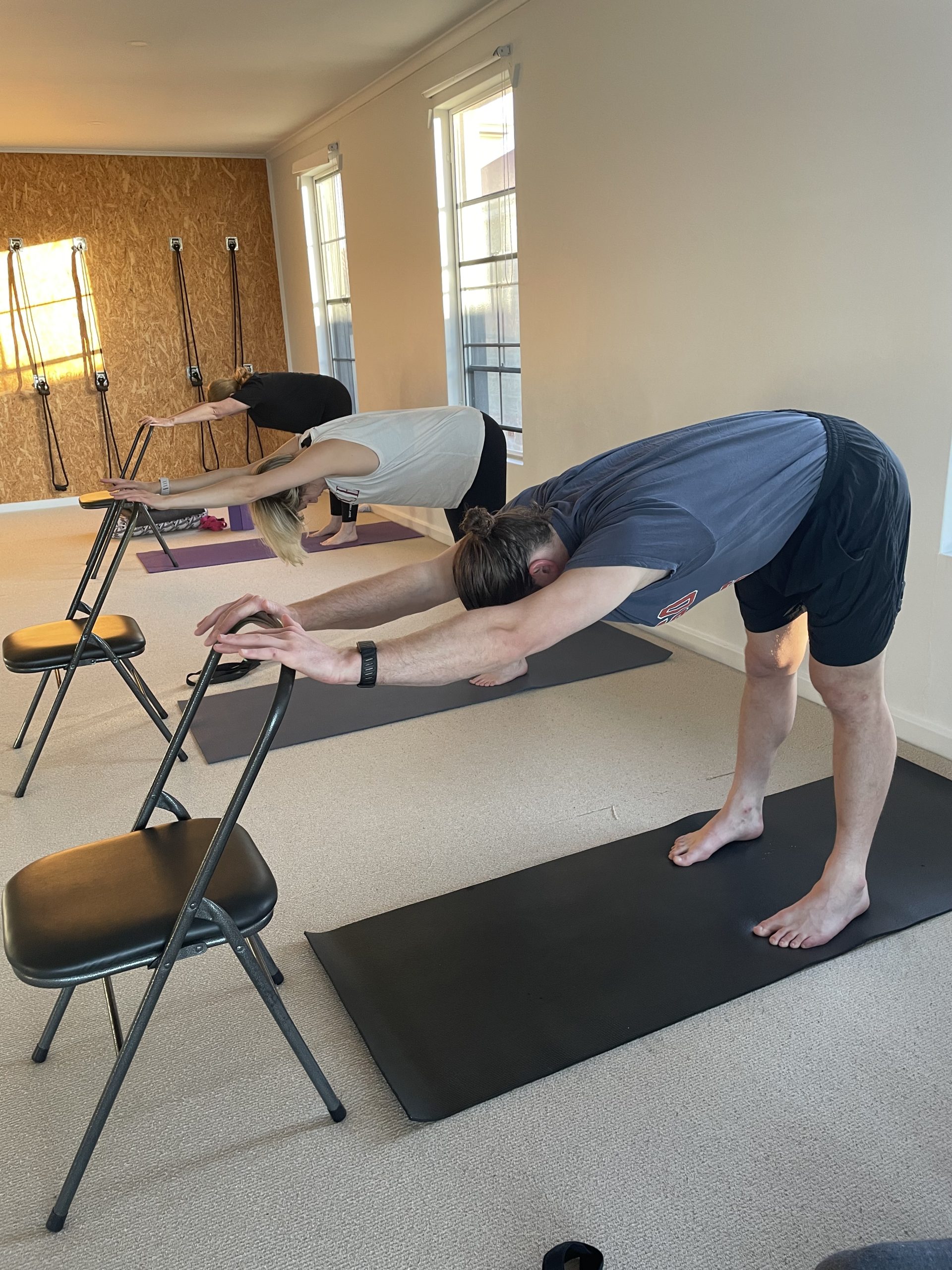
What a general yoga class can do for you: A general yoga class is a guided space to build awareness, strength and calm. It is not an individual therapy session, but it can support almost everyone who steps onto the mat.
Why your background matters
Knowing a student’s background, including any injuries or health conditions, helps a teacher offer modifications and suggestions so you can get the most out of your practice and avoid aggravating anything. Let your teacher know before class begins. It takes a minute, and it shapes how you are guided through the session.
This is where Iyengar yoga offers something special. Its attention to precision, careful sequencing and the skilful use of props means the practice can be adapted to you, so you leave feeling empowered, grounded and nourished by what you discover in your own body. Just as important is the relationship between teacher and student. A teacher who knows you, watches you over time and sees how you respond can guide your progression, deepen your understanding and inspire you to keep exploring, which is something a book or video cannot replicate.
What a general class is for
A general class is not a one-to-one program built around a single person’s needs, but it is far from one-size-fits-all. Your teacher guides the whole group while offering modifications and suggestions where they are needed. It is an environment where everyone practises the time-tested tools of yoga for their overall health and wellbeing, and where the class is designed to help you build:
- Body awareness
- New discoveries in both body and mind
- A better understanding of how to respond to your body’s needs
- Greater ability to make your own adjustments within the poses
You do all of this with the guidance, support and watchful eye of your teacher, and alongside others. Practising side by side creates a friendly, supportive community: you share the effort, the good humour and the quiet moments, and the energy of the room often carries you further than you would go on your own. Students who want more individual attention can also work one-to-one in private sessions, but the aim of a general class is to give you the tools, and the confidence, to keep learning from your own practice.
The Iyengar approach
Iyengar yoga, developed by B.K.S. Iyengar, is known for its attention to precision, alignment and careful sequencing of poses. Props such as blocks, belts, bolsters and chairs are used to support the body, so that people of different ages, strengths and levels of flexibility can practise the same poses safely and learn what correct action feels like.
Poses are held with attention rather than rushed, which builds stamina, steadiness and awareness. The teacher’s detailed instruction and close observation help you refine each pose. Over time, you learn to notice what is happening in your own body and to make your own adjustments, which is why the practice suits beginners and experienced students alike.
Benefits for the whole body, and why regular practice matters
As we practise, we progressively develop greater ease, strength, balance, calm and, importantly, integration within the poses. This supports the functioning of all eleven systems of the body: the skeletal, muscular, nervous, endocrine, cardiovascular, lymphatic and immune, respiratory, digestive, urinary, reproductive and integumentary systems.
The practice is yours to keep up. The more regularly you return to the mat, the more you will experience its effects over the course of your life. Many people notice benefits from their very first class, so if you have felt a difference already, that is a good sign. Keep attending and enjoy the lasting results.